
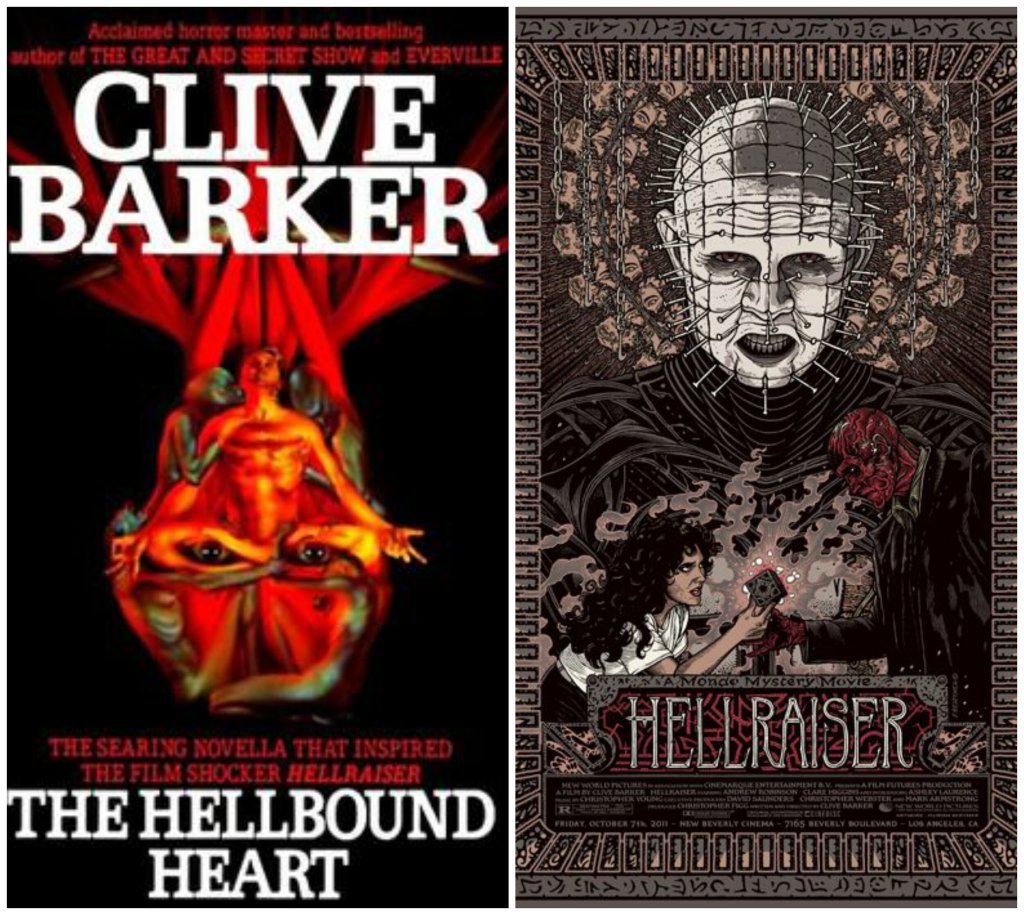
Welcome to part 2 of my new “Film vs Novel” series! In 1986, queer author Clive Barker, who had already turned some heads with his dark and twisted “Books of Blood” short stories, published the novella “The Hellbound Heart” and introduced the world to sado-masochistic demons known as the Cenobites. A year later, he did what few authors have done, and directed his own major motion picture adaptation of the novella. It’s a pretty faithful adaptation for the move part, but with some key differences. Keep reading to find out what they are!
WARNING! Spoilers ahead.
Larry is Rory in the novel, and he and Kirsty are not related
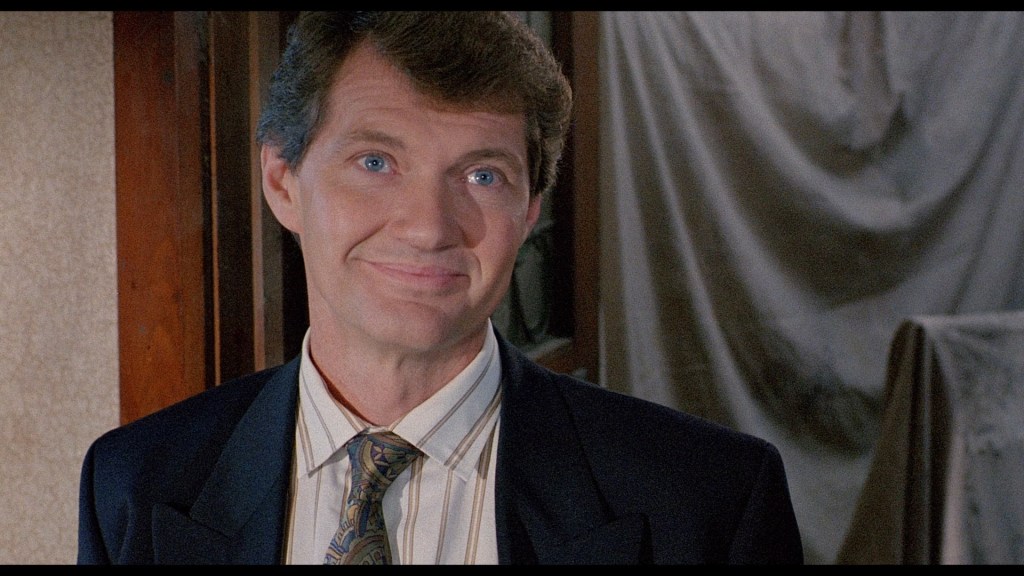
The character “Larry” in Hellraiser is Kirsty’s dad. In The Hellbound Heart, his name is Rory, and he is not related to Kirsty. In fact, it is heavily implied that Kirsty has a romantic crush on Rory, which contributes to her tension with Julia. About mid-way through the book, Rory calls Kirsty and asks him to check in on Julia, to help solve their relationship drama, and while she resents that everything is about Julia, she sees the endeavor as a “kind of togetherness” with Rory.
While I can’t say I know for certain why Barker made this change in the film, my suspicion is because the characters have very few scenes together and there just isn’t time to build that romantic attachment on screen. In a novel, you can be in the characters’ heads, making it easy to see how one might feel for the other. In a film, it has to be shown, and changing them to a father/daughter dynamic is a much more efficient way to create a connection between the characters and raise the stakes with very little exposition. In addition to that, their familial relationship makes her a niece to Frank as well, which adds a sinister “predatory uncle” vibe to his character.
The Puzzle Box takes hours to solve, but blood helps Kirsty speed things up
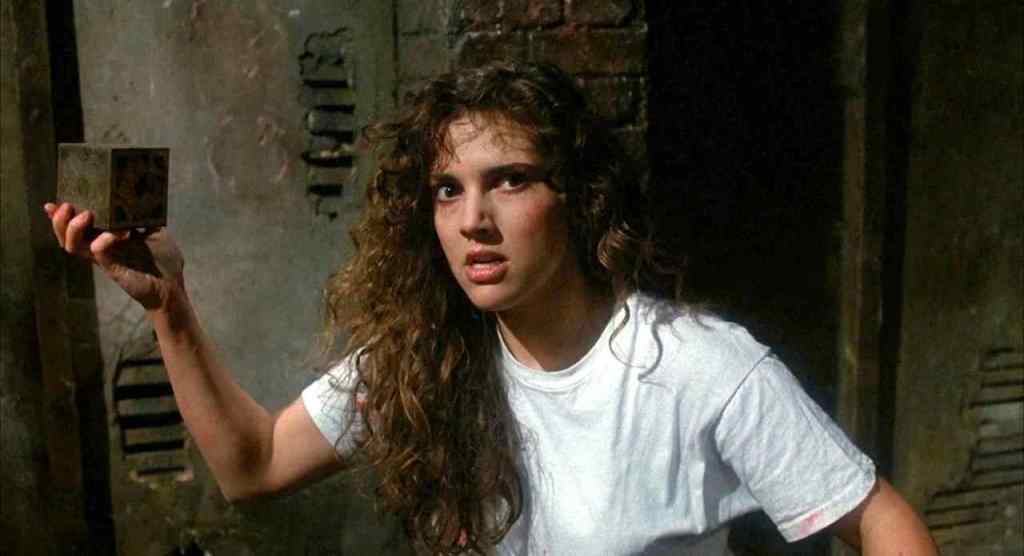
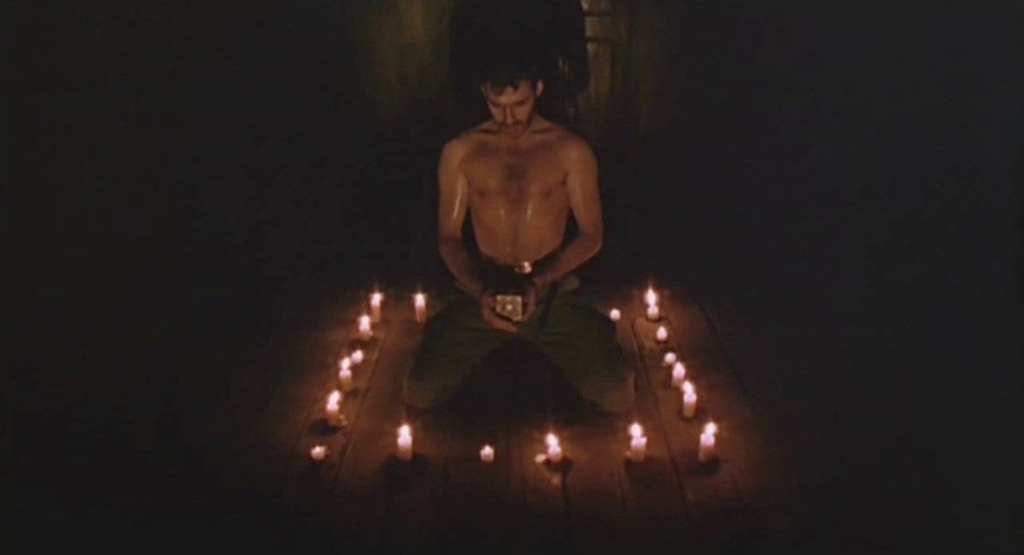
In the intro to Hellraiser, we don’t get a firm sense of how long Frank has spent with the infamous Puzzle Box, called Lemarchand’s Configuration in The Hellbound Heart. We cut from a marketplace where he buys the box from a shady dealer, to a dark room with Frank surrounded by candles, pondering over the box, with no indication of how much time has passed, but when the pieces start moving, they move fast. Essentially the box undergoes two transformations, and the Cenobites arrive. Later, when Kirsty has the box in the hospital, it takes her no time at all to find the solution. It’s almost as if the box solves itself, implying a sense of doom over anyone who finds it. In the movie, it seems as if the Cenobites want to be summoned.
In The Hellbound Heart, Lemarchand’s configuration doesn’t transform, it comes apart entirely into tiny pieces, and it takes hours to solve, implying that only someone as obsessed as Frank will be able to open it. Barker writes: “Only after several hours of trial and error did a chance juxtaposition of thumbs, middle and last fingers bear fruit: an almost imperceptible click, and then–victory!–a segment of the box slid out from beside its neighbors.” However, when Kirsty finds herself in possession of the box, something helps speed her along: Blood, from Frank’s mutilated body. The blood reveals the nearly invisible cracks between the pieces of the puzzle, providing her a road map to its solution.
Had the film depicted the box this way it could have slowed things down substantially. It’s one of those details that works particularly well on paper and makes reading endlessly rewarding.
Frank sought only pleasure, not pain
It’s well known in pop culture that the Cenobites offer both “infinite pain and infinite pleasure.” But Frank wasn’t originally wise to this duality. In Hellraiser, he tells Julia that the box opens “doors to pleasure of Heaven or Hell. I didn’t care which.” He goes on to explain that he underestimated the limits of the sensations the Cenobites provided, hence his desire for escape, but it’s clear that he had at least some notion going in that pain was part of the package.
In The Hellbound Heart, Frank was seeking only new levels of carnal pleasure. When the Cenobites arrive, their mutilated and grotesque appearance shocks and confuses him. Barker writes: “He had expected sighs, and languid bodies spread on the floor underfoot like a living carpet; had expected virgin whores whose every crevice was his for the asking…But no. No women, no sighs. Only these sexless things with their corrugated flesh.”
Later he reflects that he was “naive” to believe that “his definition of pleasure significantly overlapped with that of the Cenobites.” While the film version of Frank speaks of “pain and pleasure indivisible,” the book describes the experience as simply “incalculable pain” which only inhuman creatures like the Cenobites might consider a form of pleasure. So while both versions explore sado-masochistic themes, the film takes it a step further by indicating that pain and pleasure can both be desirable for humans, which is great because here at ryancharleslieb.com we don’t believe in kink shaming!
Frank’s link to the physical world is semen

You read that correctly. While Rory/Larry’s blood is ultimately the thing that allows Frank to come back across the threshold into the living world, the novel version requires something a little extra. It isn’t enough for blood to be spilled on the location where Frank was taken. It has to be mixed with a physical piece of Frank that was left behind, a portion of his body that keeps him linked to that location, and allows him to absorb the blood and start rebuilding his body. That physical piece in this instance happens to be his semen.
Upon solving the puzzle box, four of the five Cenobites arrive and ask him to accept the sensations they offer. When he agrees, his body goes into extreme sensory overload, as if the cenobites turned all of his nerve endings up to eleven. He feels dust collide with his skin, he hears sounds from miles away, he sees every minute detail of the room, and when he shuts his eyes he begins reliving every sensation from his past. Among these memories are countless sexual encounters, and he absent-mindedly masturbates, ultimately ejaculating onto the floor. Because of this, he maintains a link with the room where the cenobites were summoned, and is able to escape when Rory’s blood is mixed with his lingering essence.
Kind of makes you wonder if there are cenobites in hell standing around a water cooler, saying things like: “I had another one ejaculate today, don’t you hate that?”
“Pinhead” has the voice of an excited girl
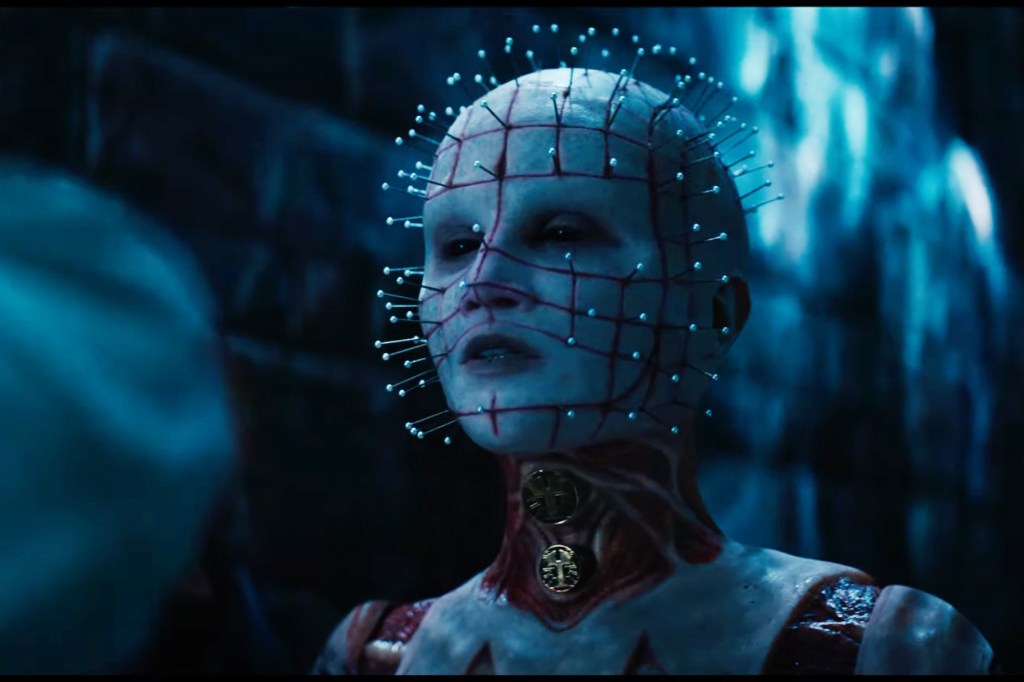
The most notable change between the novel and the film is the one that has been talked about to death on the internet, primarily around the time that the 2022 reboot was marketed and released. The decision to cast trans woman Jamie Clayton as Pinhead caused a monsoon of male insecurity, with thousands of dude bros flocking to the internet to proclaim that the series has gone “woke!” and it’s “not the original Pinhead,” at which point the folks who can actually read would reply with “actually, Pinhead was a girl in the book.”
Well, that’s technically only partially true. The Cenobites are described as “sexless” and referred to in the prose as “it” instead of he, she, or they. But in the description of the Cenobite later referred to in pop culture as “Pinhead” there is one notably gendered trait: “Its voice…was light and breathy–the voice of an excited girl.” This is followed up by the description of the cenobite’s grid-marked head which is full of jeweled pins at each intersection, confirming that this is in fact the iconic character portrayed by Doug Bradley.
So yes, even though the Cenobites have no gender, a female actor playing pinhead is in fact more faithful to the book’s description, which is why I was absolutely thrilled to hear about Clayton’s casting! And while that film wasn’t perfect, I think she did a fantastic job as the character!
What do y’all think? Are any of these things you wish Barker had kept in his film? What are you glad was different? Anything I missed? let me know in the comments!
 Ryan Charles Lieb